
Grassroots & Regional Partners
- Community-based organisations leading field data collection and screenings
- Local academic and research institutions validating models
- Training the next generation of African health informaticians
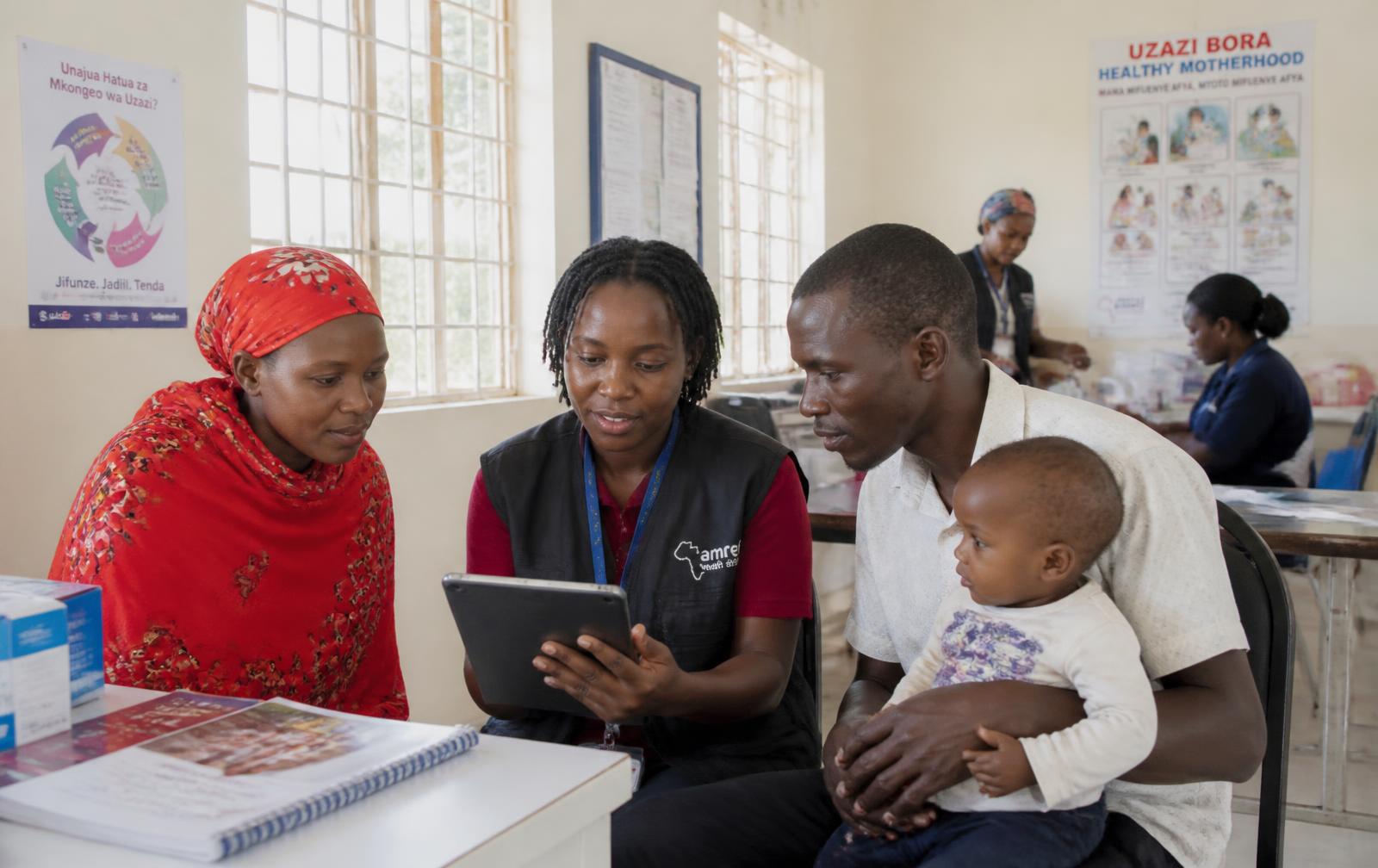
Continental Health Security
The Africa Alliance for Health, Research and Economic Development unites sovereign partners, advanced data architecture and community delivery to safeguard populations, eradicate disease burdens and drive sustainable growth across the continent.
0.0M
People reached
Direct beneficiaries of health, WASH and livelihoods programming since 2016.
0
Countries of operation
Active programme, surveillance or technical-assistance presence across Africa.
0+
Youth enterprises incubated
Young people trained, mentored and linked to capital through incubation cohorts.
0.0%
Programme expenditure ratio
Share of total expenditure applied directly to programme delivery in FY2025.
Executive Overview
AAHRED operates at the intersection of advanced computation, rigorous economic policy and frontline public health. Recognising health as the cornerstone of human capital and macroeconomic stability, our mandate is to deliver decision-grade intelligence, robust regulatory frameworks and scalable technical solutions to ministries of health, multilateral agencies and global development partners. By bridging computational innovation and community-level execution, we turn health security into a high-return capital investment.
Detection-to-notification interval
9.1 days3.4 days
Households with safe water access
41%73%
Diarrhoeal incidence in WASH catchments
24.6%11.2%
Enterprises trading after 24 months
—68%
Authorised ministries, researchers and multilateral partners can request credentials for AAHRED analytical environments.
Assurance
FY2025 statements carry an unqualified independent audit opinion, with systems mapped to uniform grant guidance and GDPR-aligned data protection.
Strategic Pillars
Modernising regional health infrastructure through integrated digital registries and seamless pre-hospital-to-institutional data pipelines.
ExploreDeploying spatial econometrics and simulation engines to forecast public health shocks and quantify economic losses.
ExploreAuditing statutory frameworks and strengthening legal enforcement across fragile health ecosystems.
ExploreEmpowering communities through water infrastructure, enterprise incubation and gender-inclusive financial access.
ExploreResults in numbers
Unique direct beneficiaries de-duplicated across programmes, reported alongside the programme investment required to reach them.
People reached (millions) against programme investment (USD millions)
Source: AAHRED monitoring system, verified annually
Share of FY2025 programme expenditure by thematic area
Source: FY2025 audited management accounts
Interactive Intelligence
A secure analytical environment for aggregate health security metrics, vulnerability indices and resource mapping — built for ministry officials, researchers and multilateral partners, and governed by role-based access controls.
 Access Full Analytical Portal
 Health System Fragility Index
0.62
WASH Coverage Gap
38%
EMS Linkage Rate
71%
Facilities Mapped
4,180
Indicative aggregate view. Disaggregated data is released to authorised institutions under a data-sharing agreement.
Accountability
Governance, audit and safeguarding are published up front so due diligence starts from evidence rather than assurances.
External audit
Unqualified opinion
Independent statutory audit of FY2025 consolidated financial statements.
Financial standard
IFRS-aligned
Accrual accounting with restricted and unrestricted fund segregation.
Grant compliance
2 CFR 200 ready
Systems mapped to uniform guidance for federal and bilateral awards.
Data protection
Kenya DPA 2019 · GDPR-aligned
Registered data controller with documented processing agreements.
Safeguarding
PSEAH policy in force
Mandatory training, survivor-centred reporting and independent investigation.
Anti-fraud
Zero-tolerance
Whistleblower channel, conflict-of-interest register and sanctions screening.
Global goals
Every portfolio maps to national development plans and donor results frameworks at indicator level, not by thematic association.
Ecosystem
AAHRED acts as a trusted bridge between international capital and local execution, co-creating solutions with community organisations, universities, ministries and global donors.
Tripartite operating model
Evidence generation translates into execution and delivery, which is in turn evaluated and governed — closing the loop between research, policy design, operations and accountability. Each arm is independently staffed and independently reported, so evaluation is never marked by the team that delivered the work.
Evidence generation, policy analytics and horizon scanning
Technical assistance, direct execution and capacity building
Accountability, systems strengthening and oversight
Burden, equity and fiscal-space diagnostics using national datasets, geospatial layers and community consultation.
Costed intervention design with theory of change, indicator framework and explicit assumptions on attribution.
Controlled implementation with embedded measurement to test feasibility, unit economics and delivery risk.
Government-owned scale-up with SOPs, workforce training, procurement pathways and digital reporting rails.
Independent evaluation, public financial audit and open publication of results — including null findings.
Engagement matrix
Who AAHRED works with at each level of governance, what it delivers there, the legal instruments used and the cadence of reporting back to partners.
| Governance level | Core institutional clients | Key service offerings | Engagement instruments | Reporting cadence |
|---|---|---|---|---|
| Continental & Multilateral | African Union, Africa CDC, UNECA, WHO AFRO, World Bank, Global Fund | Strategic framework development, regional public goods governance, cross-border treaty alignment and macro-level grant evaluation. | Framework agreements, technical secretariats, joint working groups | Multi-year (3–5 yrs) |
| Regional Economic Communities | EAC, IGAD, ECOWAS, SADC | Surveillance harmonisation, cross-border migration protocols and trade-related biosecurity standards. | Protocol harmonisation compacts, corridor surveillance MOUs | Annual review cycles |
| National Governments | Ministries of Health, Finance, Gender/Social Protection and Agriculture | Policy formulation, UHC benefit package design, fiscal space analysis and embedded ministerial technical assistance. | Embedded advisory placements, costed national plans, MoUs | Budget-cycle aligned |
| Sub-National & Local Governance | County and district health directorates, municipalities, local councils | Decentralised planning, budget execution tracking, frontline worker training and community engagement architecture. | County work plans, community compacts, frontline training grants | Quarterly |
Unlike academic think tanks producing non-operational papers, or NGOs executing without rigorous evaluation, AAHRED unifies theoretical rigour with frontline delivery.
Empirical research → policy drafting → pilot implementation → nationwide scale-up → independent impact evaluation.
Endogenous African data models accounting for informal economies, pastoralist mobility and customary governance systems overlooked by external consultancies.
World Health Organization
African Union Commission
African Union
African Union
OECD Development Assistance Committee
US Government Publishing Office
International Finance Corporation
United Nations Statistics Division
Africa Centres for Disease Control and Prevention
European Union