
AAHRED logoAAHRED home

Governance & Leadership

The oversight architecture behind every commitment we make

Founded in 2016 and headquartered in Nairobi, Kenya, AAHRED operates under an independent board with five standing committees. Governance is the reason partners can rely on our results — not a formality appended to them.

Governance principles

Three commitments that shape every decision

Separation of powers

The board sets strategy and holds management to account. Executive leadership delivers. No individual holds both mandates.

African-led, globally accountable

Governance bodies are majority African, with international members bringing donor, academic and audit perspectives.

Documented and disclosable

Terms of reference, committee mandates, register of interests and meeting cadence are published and available for due diligence.

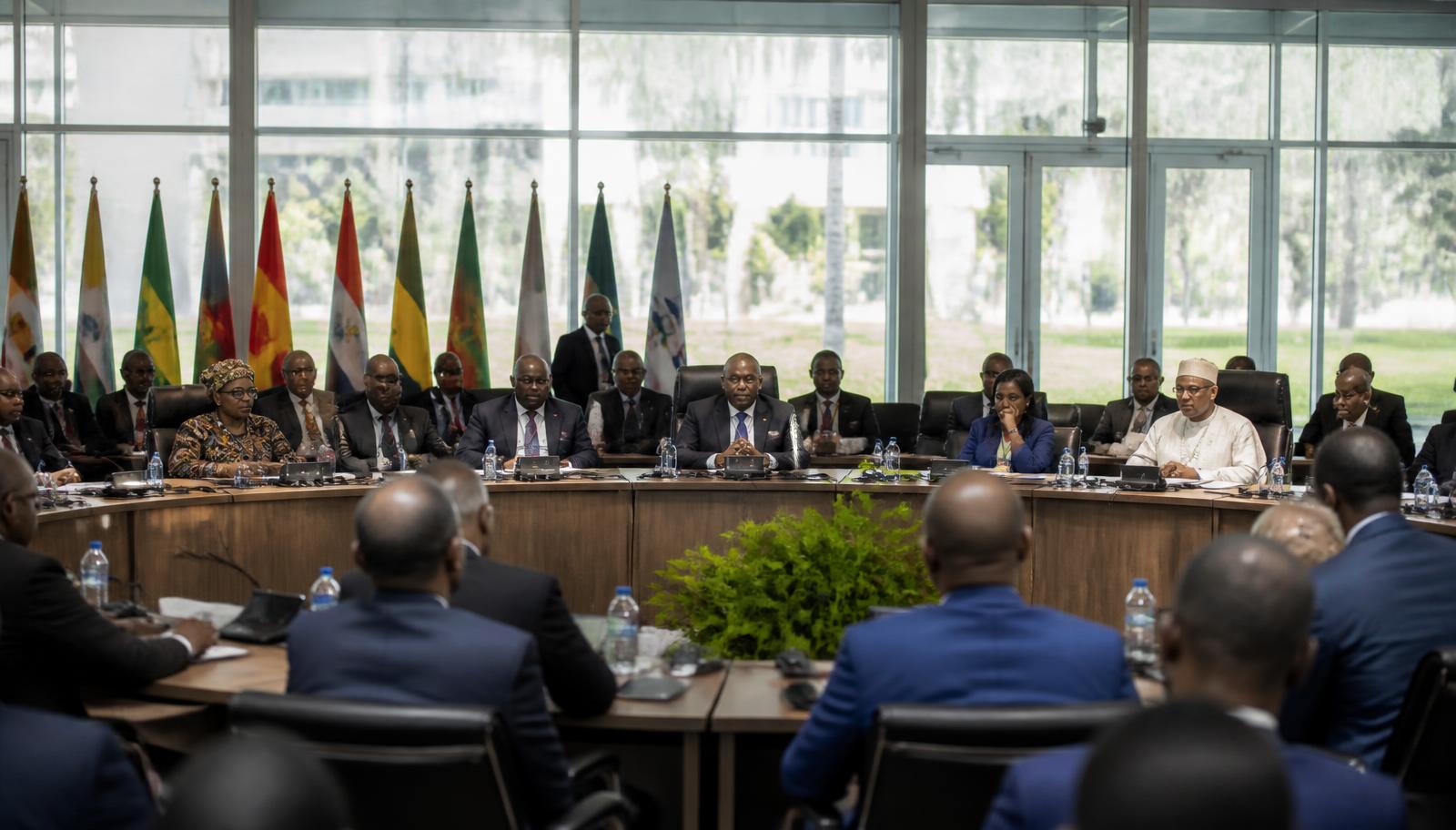
Delegates seated around a large conference table at a high-level African policy roundtable
Annual governance and partners' assembly, convening board members, sovereign counterparts and institutional funders.

Structure

Board and standing committees

Each body has a written mandate, a defined quorum and an annual effectiveness review. Committee chairs report to the full board and, where relevant, directly to external auditors.

Board of Directors

Sets institutional strategy, approves the annual budget and appoints the Executive Director. Meets quarterly with an independent non-executive majority.

  • Independent non-executive majority
  • Quarterly full-board sittings
  • Annual board effectiveness review

Audit & Risk Committee

Oversees the external audit, internal control environment, enterprise risk register and fraud response.

  • Chaired by an independent director
  • Direct line to external auditors
  • Reviews the risk register each quarter

Scientific & Ethics Review Board

Reviews research protocols, data governance and human-subject ethics before any study is authorised.

  • Institutional review board function
  • Independent ethicist and community representative
  • Protocol registration and pre-analysis plans

Safeguarding & Accountability Panel

Independent oversight of safeguarding cases, community complaints and the whistleblower channel.

  • Survivor-centred case handling
  • Independent investigation mandate
  • Annual public reporting

Programme Quality Committee

Assures technical standards, monitoring frameworks and evaluation independence across the portfolio.

  • Approves the results framework
  • Commissions external evaluations
  • Signs off adaptive management decisions

Investment & Partnerships Council

Guides resource mobilisation, blended finance structuring and strategic institutional partnerships.

  • Due-diligence oversight
  • Donor stewardship standards
  • Blended-finance instrument design

Institutional history

From a Nairobi research alliance to a multi-country institution

  1. 2016

    Founded in Nairobi

    Established as an African-led alliance linking health systems research with economic development practice.

  2. 2018

    First multi-country programme

    Regional WASH and health systems portfolio launched across three East African countries.

  3. 2020

    Emergency response capability

    Rapid-response architecture stood up during the pandemic, supporting national surveillance and continuity of essential services.

  4. 2022

    Data & digital architecture

    Interoperable health information exchange and geospatial analytics platform deployed with ministry partners.

  5. 2023

    Economic empowerment at scale

    Youth incubation and women's financial access programmes surpassed 3,000 enterprises supported.

  6. 2025

    Strategic Framework 2025–2030

    New institutional strategy adopted, integrating health resilience and economic prosperity under one results architecture.

Conducting due diligence on AAHRED?

The secretariat maintains a standing due-diligence pack covering registration certificates, audited statements, governance charters, insurance, safeguarding records and donor references. It is released under NDA within five working days.

Tripartite operating model

Think tank, implementation partner and governance/MEL advisory in one institution

Evidence generation translates into execution and delivery, which is in turn evaluated and governed — closing the loop between research, policy design, operations and accountability. Each arm is independently staffed and independently reported, so evaluation is never marked by the team that delivered the work.

Pillar 1

Think Tank & Applied Research Arm

Evidence generation, policy analytics and horizon scanning

  • Translational policy research turning epidemiological, macroeconomic and spatial data into legislative roadmaps and ministerial briefs.
  • Econometric and micro-simulation modelling: cost-benefit analysis, UHC fiscal space assessment and predictive shock modelling.
  • Policy harmonisation with AU Agenda 2063, the Abuja Declaration, the Maputo Plan of Action and Africa CDC frameworks.
  • Ethics, bioethics and data sovereignty protocols safeguarding indigenous health data, genomic assets and vulnerable population registries.
Core outputs
Ministerial briefs, costed policy options, national investment cases, peer-reviewed papers and open data dictionaries.
Methods & instruments
Micro-simulation, spatial econometrics, cost-benefit and fiscal-space modelling, horizon scanning and political-economy analysis.
Delivery capacity
42 researchers, economists and modellers across epidemiology, health financing, GIS and bioethics.
Pillar 2

Implementation & Programme Delivery Arm

Technical assistance, direct execution and capacity building

  • Direct programme rollout and pilot scalability across maternal-child health, cross-border surveillance, nutrition hubs and safety nets.
  • Embedded technical assistance seconding senior advisors, health economists and data architects into line ministries and RECs.
  • SOP development codifying clinical pathways, MISP emergency response and multi-agency coordination manuals.
  • Institutional capacity building for decentralised civil servants, local councils and community health networks.
Core outputs
Programme designs, SOP libraries, service-delivery pilots, supply and referral pathways, trained frontline cadres.
Methods & instruments
Embedded technical assistance, results-based grant execution, MISP emergency response, sub-award management and procurement support.
Delivery capacity
Field teams across 14 countries with surge deployment inside 72 hours for outbreak and displacement events.
Pillar 3

MEL & Governance Advisory

Accountability, systems strengthening and oversight

  • Third-party monitoring and independent verification of multilateral programmes in high-risk and cross-border corridors.
  • Impact evaluation using RCTs, difference-in-differences and mixed-method process evaluation to measure attribution and ROI.
  • Digital MEL infrastructure: mobile-first pipelines, geospatial dashboards and automated anomaly detection against data falsification.
  • Public financial management and governance audits covering procurement integrity and expenditure tracking.
Core outputs
Independent verification reports, impact evaluations, governance and PFM audits, live MEL dashboards.
Methods & instruments
RCTs, difference-in-differences, mixed-method process evaluation, third-party monitoring and anomaly detection analytics.
Delivery capacity
Evaluation unit operating to OECD-DAC criteria with a firewalled reporting line to the Board Audit Committee.

Programmatic lifecycle

01

Diagnose

Burden, equity and fiscal-space diagnostics using national datasets, geospatial layers and community consultation.

02

Design

Costed intervention design with theory of change, indicator framework and explicit assumptions on attribution.

03

Pilot

Controlled implementation with embedded measurement to test feasibility, unit economics and delivery risk.

04

Scale

Government-owned scale-up with SOPs, workforce training, procurement pathways and digital reporting rails.

05

Evaluate

Independent evaluation, public financial audit and open publication of results — including null findings.

Engagement matrix

Multi-level institutional engagement

Who AAHRED works with at each level of governance, what it delivers there, the legal instruments used and the cadence of reporting back to partners.

Governance levelCore institutional clientsKey service offeringsEngagement instrumentsReporting cadence
Continental & MultilateralAfrican Union, Africa CDC, UNECA, WHO AFRO, World Bank, Global FundStrategic framework development, regional public goods governance, cross-border treaty alignment and macro-level grant evaluation.Framework agreements, technical secretariats, joint working groupsMulti-year (3–5 yrs)
Regional Economic CommunitiesEAC, IGAD, ECOWAS, SADCSurveillance harmonisation, cross-border migration protocols and trade-related biosecurity standards.Protocol harmonisation compacts, corridor surveillance MOUsAnnual review cycles
National GovernmentsMinistries of Health, Finance, Gender/Social Protection and AgriculturePolicy formulation, UHC benefit package design, fiscal space analysis and embedded ministerial technical assistance.Embedded advisory placements, costed national plans, MoUsBudget-cycle aligned
Sub-National & Local GovernanceCounty and district health directorates, municipalities, local councilsDecentralised planning, budget execution tracking, frontline worker training and community engagement architecture.County work plans, community compacts, frontline training grantsQuarterly

Closing the policy-to-execution gap

Unlike academic think tanks producing non-operational papers, or NGOs executing without rigorous evaluation, AAHRED unifies theoretical rigour with frontline delivery.

End-to-end programmatic lifecycle

Empirical research → policy drafting → pilot implementation → nationwide scale-up → independent impact evaluation.

South-led contextualisation

Endogenous African data models accounting for informal economies, pastoralist mobility and customary governance systems overlooked by external consultancies.

Evaluation standards

OECD-DAC criteria

Financial reporting

IFRS + 2 CFR 200

Data protection

GDPR / national DPAs

Safeguarding

PSEAH policy, independent channel