AAHRED logoAAHRED home

Section III

Core Thematic Initiatives

Four institutional pillars, extended by operational portfolios spanning WASH, geospatial intelligence, economic inclusion, trade governance and grant management — each with published indicators, effect sizes and treaty alignment.

0

Reporting facilities

Connected to interoperable surveillance registries across 14 countries.

0.0 days

Detection to notification

Down from 9.1 days at network baseline in 2020.

0.0x

Blended benefit-cost ratio

Weighted across all six programme lines, 2024 audit.

0

Instruments aligned

Conventions, treaties and standards governing programme design.

Capability maturity against regional benchmark

Composite index (0–100) across six technical dimensions, 2025 institutional self-assessment validated by external reviewers.

Surveillance performance, 2020–2025

Detection-to-notification interval against weekly reporting completeness across the connected facility network.

Epidemiologists monitoring national disease surveillance dashboards in an operations centre

Pillar 1

Advanced Health Systems Engineering & Epidemic Surveillance

Health security requires real-time visibility and seamless information architecture. AAHRED designs and deploys next-generation surveillance frameworks that integrate community-level diagnostics with institutional health records.

  • Pre-hospital & institutional integration: bridging EMS with hospital registry networks to track patient pathways from dispatch to clinical outcome.
  • Syndromic & pathogen monitoring for emerging infectious threats, waterborne risks and nutritional vulnerabilities.
  • Interoperable Health Information Exchanges (HIE) standardising transmission between clinics, hospitals and national ministries.
  • Event-based surveillance with automated anomaly detection and ministry escalation pathways under IHR Article 6.

0

Facilities reporting weekly

0%

Reporting completeness

0%

Faster outbreak notification

Researchers and officials reviewing econometric modelling outputs at a technical roundtable

Pillar 2

Quantitative Health Research & Economic Modeling

Moving beyond descriptive epidemiology, AAHRED uses advanced econometric modelling to evaluate the true economic toll of disease and health-system non-compliance.

  • Macroeconomic impact quantification of health shocks, water-safety failures and malnutrition on human capital and regional GDP.
  • Spatial-econometric simulation using spatial lag operators and GS3SLS estimation to control for endogeneity and spillover effects.
  • Predictive risk mapping through composite vulnerability indices and health-system fragility scores.
  • Difference-in-differences and synthetic-control evaluation of every flagship intervention, with published confidence intervals.

0

Peer-reviewed outputs

0 models

Ministry-adopted

0m

Population in models

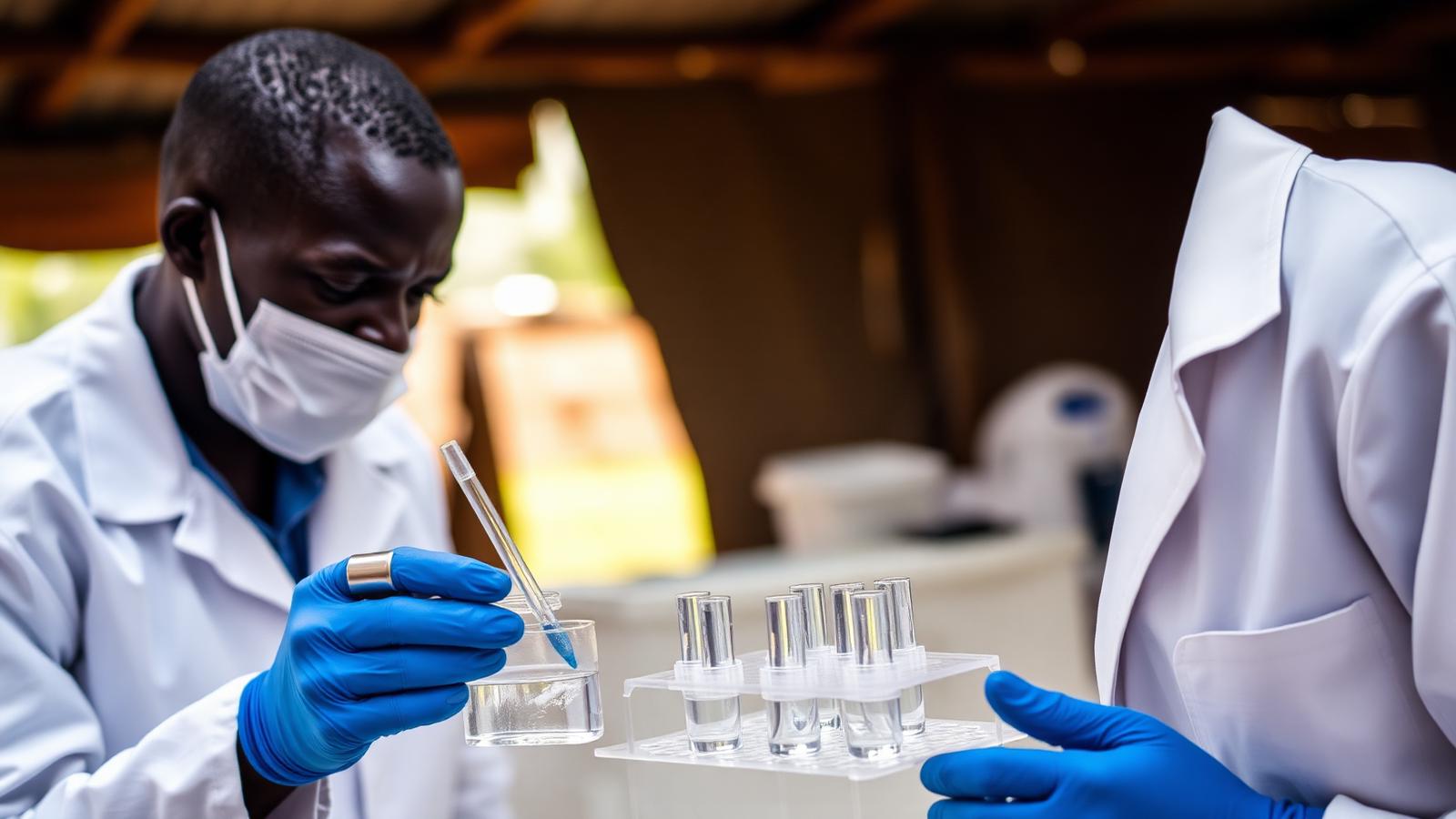
Laboratory technician conducting statutory water-quality verification testing

Pillar 3

Regulatory Audits, Statutory Compliance & Health Legislation

Robust health systems depend on enforceable legal frameworks. AAHRED provides comprehensive auditing and advisory services to ensure institutional alignment with statutory mandates.

  • Statutory compliance audits of facilities and administrative bodies against public health acts and sanitation mandates.
  • Regulatory enforcement pipelines that track non-compliance, penalise negligence and uphold patient rights.
  • Policy harmonisation for health data sharing, emergency response and cross-border cooperation.
  • Legislative drafting support and parliamentary technical briefings in five national jurisdictions.

0

Facilities audited

0

Policy instruments shaped

0.0x

Audit benefit-cost ratio

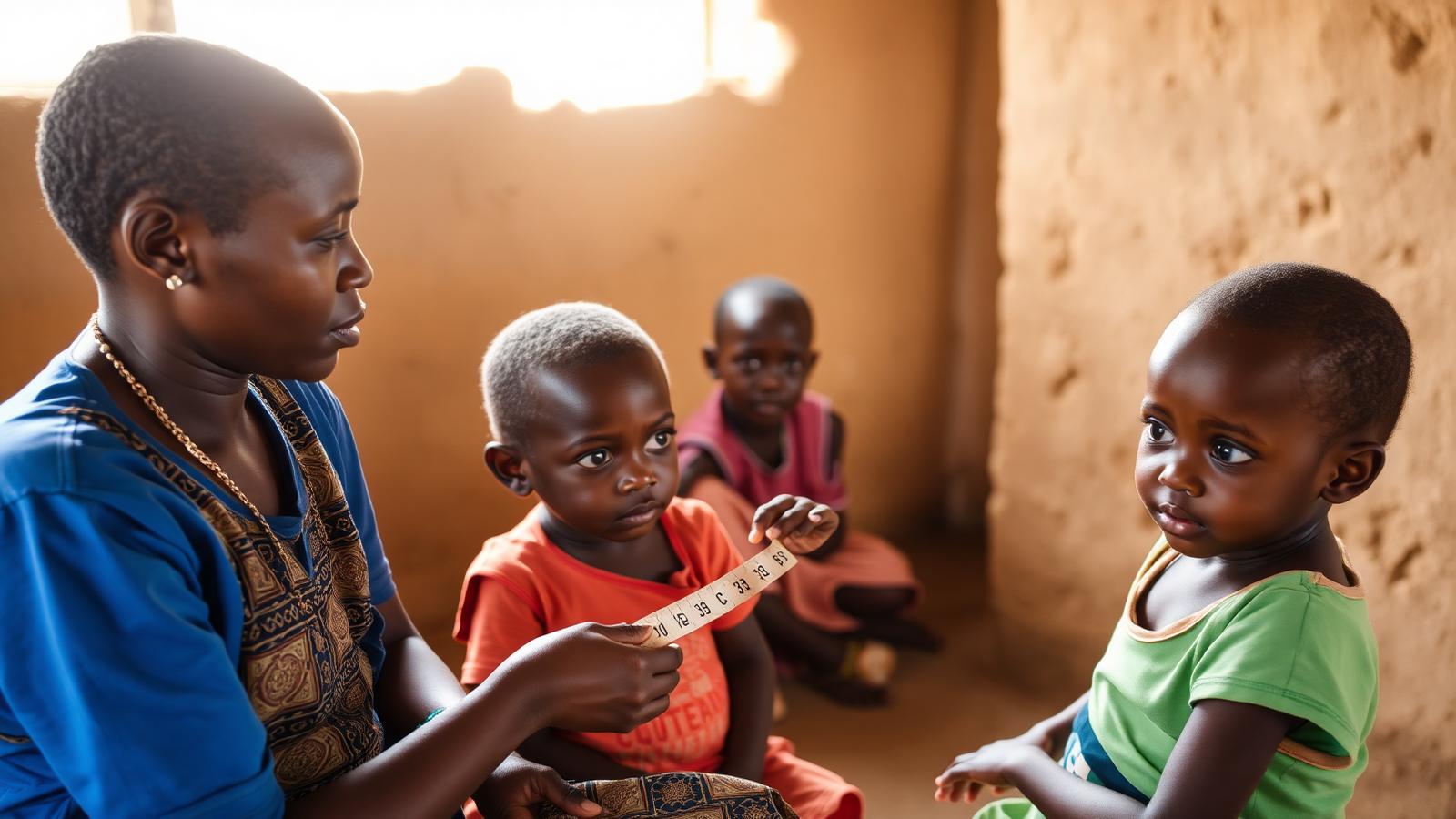
Community health worker conducting nutritional screening of a young child

Pillar 4

Socio-Economic Resilience & Sustainable Development

Recognising that health cannot be isolated from socio-economic conditions, AAHRED integrates micro-level community interventions with macro-level economic strategy.

  • Environmental & water-safety diagnostics through microbiological testing and quantitative assays.
  • Child welfare and nutritional screening via non-invasive anthropometric assessment.
  • Community health anthropology: rapid ethnographic assessment of health-seeking behaviour and cultural barriers.
  • Climate-shock livelihood protection for pastoral and rangeland economies in the Horn of Africa.

0.00m

People with safe water

0%

Stunting reduction

0

Enterprises supported

Evidence

Measured effect sizes, not aspirations

Difference-in-differences estimates at 24-month follow-up across intervention and matched comparison clusters. Confidence intervals reported at 95%.

IndicatorBaselineEndlineChange95% CI
Acute watery diarrhoea incidence (per 1,000 u5)21496-55.1%±6.2
Cholera alert episodes per district-year3.40.9-73.5%±0.4
Household water collection time (minutes/day)14841-72.3%±9.1
School days lost to waterborne illness (per pupil-year)11.64.2-63.8%±1.3
Stunting prevalence, children under five (%)31.723.4-26.2%±2.7
Out-of-pocket health spend per household (USD/yr)7439-47.3%±5.8

Burden addressed by thematic domain

DALYs averted against the share of regional GDP loss attributable to each domain, modelled over the 2025–2030 strategy window.

Cost-effectiveness by programme line

Unit costs and benefit-cost ratios verified in the 2024 independent audit.

ProgrammeUnit costBCR
Water health infrastructureUSD per person with safe waterUSD 624.3x
Youth enterprise incubationUSD per youth incubatedUSD 75.8x
Health systems strengtheningUSD per person-year of coverageUSD 1483.1x
Women's financial accessUSD per enterprise supportedUSD 116.2x
Surveillance & data platformsUSD per person under surveillanceUSD 0.427.4x
Regulatory audit & legislationUSD per capita in audited jurisdictionUSD 0.199.1x

Integrated model

The socio-economic and health prosperity nexus

Health gains and economic gains are not parallel workstreams — they compound. Each step below is measured in AAHRED programme districts.

Young entrepreneurs working together in an AAHRED-supported enterprise incubation hub
Enterprise incubation cohort — youth and women-led businesses in a programme district.
  1. 1

    Clean water & sanitation

    −55% diarrhoeal incidence

    1.24m people reached

  2. 2

    Reduced disease burden

    −47% out-of-pocket health spend

    USD 35 saved per household/yr

  3. 3

    Recovered working hours

    +18 productive days per adult/yr

    107 min/day released from water collection

  4. 4

    Enterprise participation

    +31% training completion among women

    5,240 youth, 3,900 women enrolled

  5. 5

    Household income growth

    +42% median enterprise revenue

    USD 1,180 average annual uplift

  6. 6

    Reinvestment in health

    +27% nutrition & hygiene spend

    −26% child stunting prevalence

Operational Portfolios

Where AAHRED delivers on the ground

Programmatic workstreams that translate institutional strategy into measurable field, market and policy outcomes.

1. Health Systems, WASH & Frontier Community Resilience

  • Socio-health interventions delivering health, nutrition and WASH support in marginalised, arid and frontier communities such as rangeland economies in the Horn of Africa.
  • Water health infrastructure upgrades that reduce disease prevalence and treat clean water access as a driver of economic productivity.
  • Trauma-informed and psychosocial systems partnering on child protection, SRHR and cross-border safety ecosystems.

2. Geospatial Analytics & Digital Intelligence Platforms

  • Proprietary intelligence engines such as AAHRED-Atlas integrating epidemiological, WASH, spatial and market data.
  • Spatial risk analytics using GIS, remote sensing and spatial-econometric modelling to map service gaps and conflict vulnerabilities.
  • Targeted guidance for infrastructure capital deployment and programme interventions.

3. Economic Inclusion, SME Growth & Youth Empowerment

  • Startup incubation, mentorship and business development programmes that reduce youth unemployment.
  • Capital access partnerships improving SME access to soft loans and growth capital.
  • Value-chain optimisation for private-sector partners and agricultural producer groups.

4. Policy Audits, Regional Trade & Cross-Border Governance

  • Policy audits across regional trade, customs frameworks, climate budgeting and foreign investment in the EAC and Horn of Africa.
  • Corridor and systems-change research along the major regional trade and transport routes.
  • Connecting national child protection, justice and health systems with regional transport and trade governance.

5. Multilateral Grant Management & Stakeholder Convening

  • Acquisition, design and management of multi-million-dollar funding portfolios under strict compliance and risk management.
  • High-level ecosystem advisory with ministries, corporate boards, regulators and civil society.
  • Translating field data into executive decision models, statutory frameworks and national policy advocacy.

6. Methods, Ethics & Research Integrity

  • Independent ethics review, informed-consent protocols and data-minimisation standards for every field study.
  • Pre-registration of evaluation designs and public release of anonymised analytical datasets.
  • Open code and reproducible pipelines so ministries and universities can replicate every published estimate.

Normative alignment

Conventions, treaties and standards governing our work

Every pillar is anchored to binding or authoritative international instruments. Programme design, audit criteria and reporting obligations derive from these provisions.

InstrumentIssuing bodyKey provisionApplication at AAHRED
International Health Regulations (2005)World Health OrganizationArticles 5–6, 13 & Annex 1 — core capacities for surveillance, notification and responseEvent-based surveillance, detection-to-notification benchmarking and ministry IHR core-capacity scoring.
UN General Assembly Resolution 64/292United NationsRecognition of the human right to safe drinking water and sanitationWater health infrastructure treated as a justiciable entitlement, not a discretionary service.
International Covenant on Economic, Social and Cultural RightsUnited Nations (OHCHR)Article 12 — highest attainable standard of physical and mental healthProgressive-realisation indicators embedded in every results framework and audit.
Convention on the Rights of the ChildUnited NationsArticles 24 & 32 — health services and protection from exploitationChild protection, nutrition screening and safeguarding across all programme districts.
CEDAWUnited NationsArticles 12–14 — health, economic and rural-women equalityGender-disaggregated targets across financial access and leadership pathways.
Abuja Declaration (2001)African Union15% national budget allocation to healthPublic-finance tracking in policy audits and ministry investment dialogues.
Africa Health Strategy 2016–2030African Union CommissionContinental framework for health systems and UHCAlignment of the AAHRED Strategic Framework 2025–2030 to continental milestones.
Sendai Framework for Disaster Risk ReductionUNDRRPriorities 1 & 4 — risk understanding and preparednessComposite vulnerability indices and climate-shock livelihood programming.
Paris Declaration & Accra AgendaOECD DACAid effectiveness: ownership, alignment, mutual accountabilityCountry-systems delivery, ministry data ownership and joint results reporting.
ISO 9001 / ISO 27001 principlesInternational Organization for StandardizationQuality management and information security managementData architecture controls, role-based access and audit-trail retention.
WHO Guidelines for Drinking-water Quality (4th ed.)World Health OrganizationMicrobial and chemical verification parametersField assay protocols and water-safety plan certification thresholds.
IFC Performance Standards 1–8International Finance CorporationEnvironmental and social risk management for investmentsSafeguards screening for blended-finance and SME capital facilities.

SDG 3, 6, 17

Health systems & surveillance

34% of portfolio contribution

SDG 3, 8, 9, 17

Quantitative research & modelling

21% of portfolio contribution

SDG 3, 10, 16

Regulatory audit & legislation

17% of portfolio contribution

SDG 1, 2, 5, 8, 13

Socio-economic resilience

28% of portfolio contribution

Align your institution with a measured portfolio

Costed investment cases, independent audit results and country-level results frameworks are available to prospective partners, donors and multilateral counterparts.